Large models are strong, but wiring one directly into a business workflow usually fails within two weeks: unstable output, blurred responsibility, and errors nobody can localise. A single agent cannot carry an end-to-end problem — that is the one conclusion every project so far has confirmed.
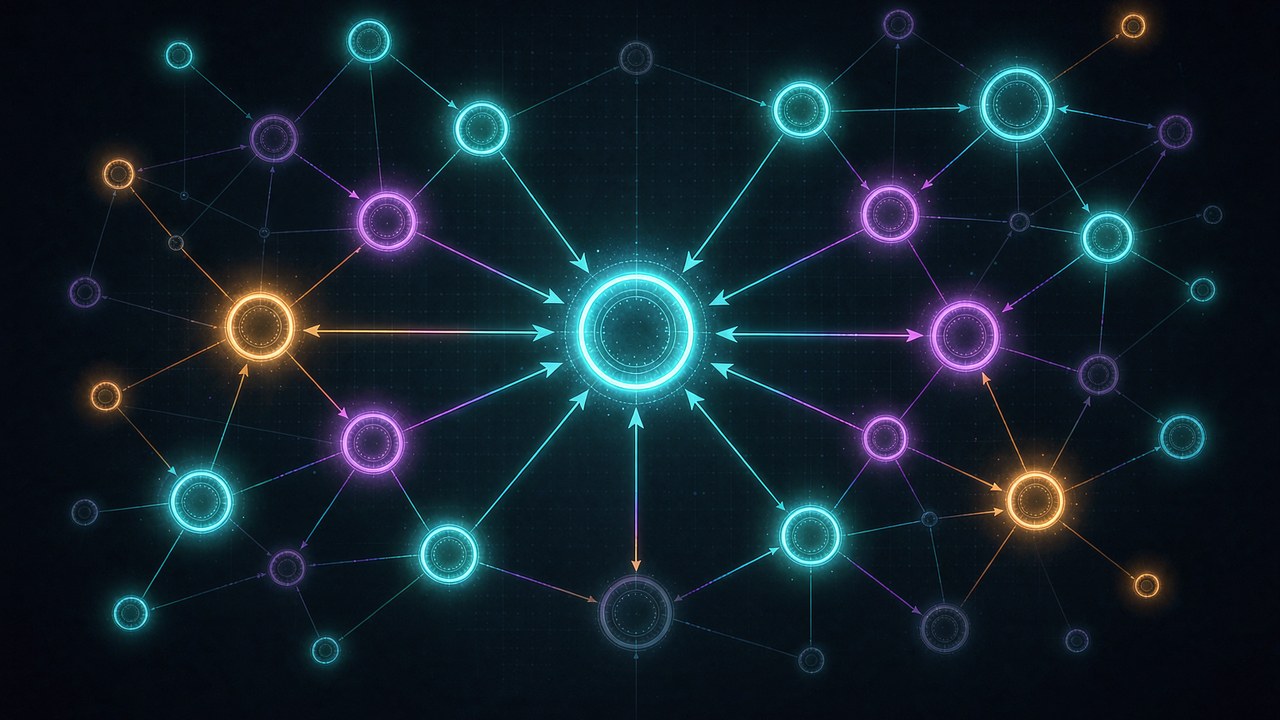
Our approach is to break a complex task into an agent chain with explicit roles: one decomposes and retrieves, one generates, one exists purely to adversarially question the generated result, and one converges everything into the final format. Each agent does one thing, and each output can be verified on its own.
The key is not more agents. It is the interrogation. A generation agent is naturally inclined to produce answers that look right. A review agent's only job is to find fault: is the source data correct, are the metrics consistent, is the conclusion actually supported by the text. That single step is what pushes the error rate into an acceptable range.
Three things have to be designed in advance on the engineering side. First, state must be replayable — every input and output lands in storage, so a failure can be pinned to a specific step. Second, timeouts and degradation — one stuck agent must never drag down the whole chain. Third, a human fallback — in high-value scenarios a human confirmation step stays in the loop.
Then there is cost. More agents means more calls, and cost climbs linearly. Our rule of thumb: let rules and small models carry the 70% of the work that is deterministic, and spend the large-model budget on the 30% that actually needs reasoning.
Multi-agent is not a silver bullet. It just takes the uncertainty out of one black box and spreads it across steps you can observe and intervene in.